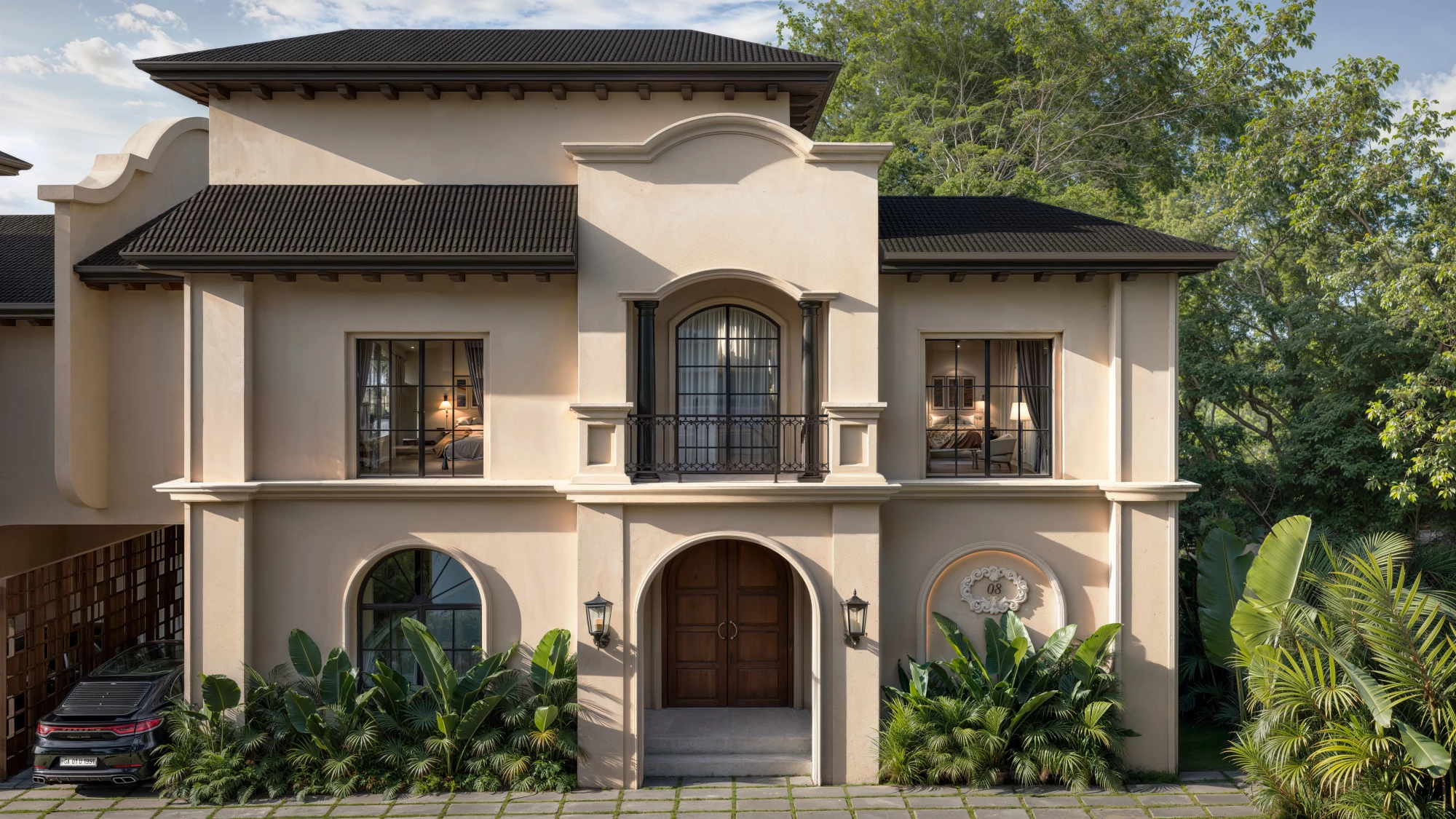
Are Holiday Homes in Goa a Good Long-Term Investment?
The conventional playbook for wealth preservation traditionally relied on vehicles like equity markets or commercial assets in Tier-1 metros. However, the modern investment landscape has shifted fundamentally.
Wealth creators are now moving away from the friction of metropolitan high-rises to embrace a new paradigm: low-density luxury real estate in coveted micro-markets. At the global forefront of this capital migration is Goa.
Goa has evolved far beyond its legacy as a seasonal weekend escape. It has matured into a thriving, year-round lifestyle economy. This evolution is driven heavily by structural catalysts like the full maturity of the Manohar International Airport (Mopa), which has seamlessly unlocked the region for a permanent influx of affluent residents.
Market data reveals the sheer velocity of this shift, with premium North Goa villa developments currently commanding a remarkable 22% to 28% year-on-year capital appreciation. For the Work-from-Paradise Executive seeking a high-performance sanctuary to counteract urban burnout, or the savvy Lifestyle Investor looking for a high-growth trophy asset, these numbers represent an unrivaled financial play.
The Scarcity Factor: Unlike traditional metropolitan expansion, Goa operates under a strict geographical and regulatory ceiling. Stringent Coastal Regulation Zone (CRZ) mandates, eco-sensitive zones, and protected agricultural green belts ensure that premium land parcels touching permanent fields or pristine forests are exceptionally rare and impossible to duplicate.
When an unprecedented wave of domestic and international HNI (High-Net-Worth Individual) demand collides with an unyielding structural supply cap, long-term asset value is virtually guaranteed. An investment in an exclusive Goan estate is no longer an alternative luxury purchase, it is a sophisticated masterstroke for multi-generational wealth preservation.
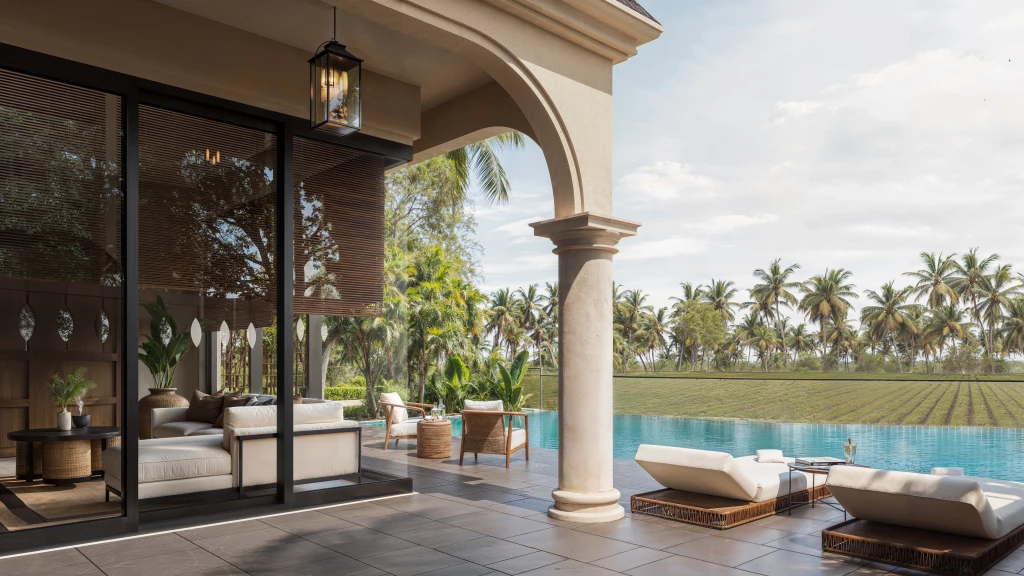
The Pros and Cons of Owning a Holiday Home in Goa
Acquiring a holiday home in Goa is a highly nuanced financial and lifestyle decision. For the Sophisticated Second-Homer or the New Wealth Lifestyle Investor, evaluating this asset requires balancing extraordinary returns against the unique logistical friction of the coastal market.
The Clear Advantages
- The Dual-Income Engine: Unlike metropolitan residential assets in Mumbai or Delhi that offer stagnant rental yields of 2% to 4%, well-placed luxury villas in North Goa command impressive short-term gross rental yields of 8% to 12%. This creates an immediate cash-flow engine alongside high capital growth.
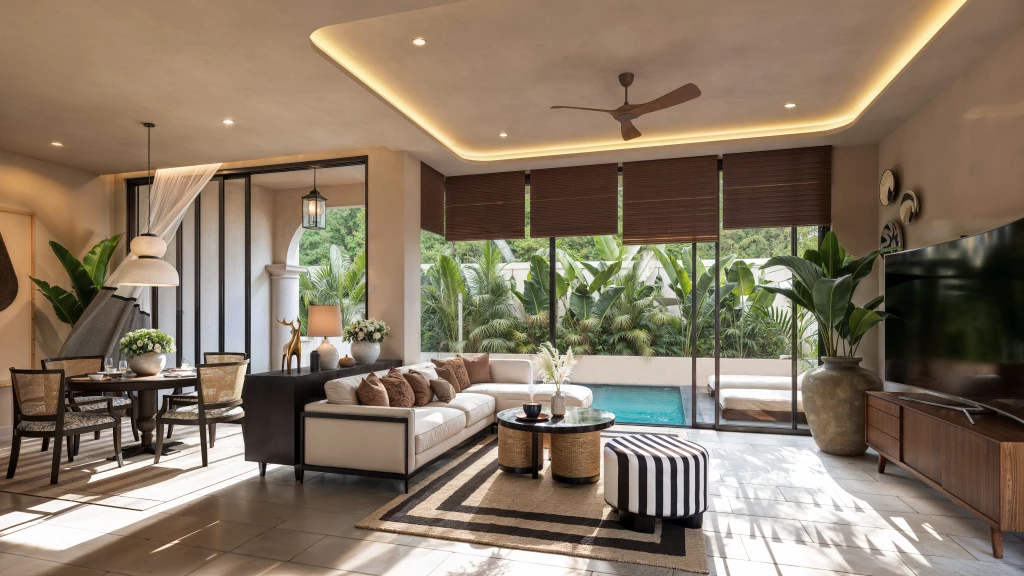
- Psychological Wealth: A second home functions as an essential cognitive reset. The true dividend is found in spaces designed with expansive volumes, double-height ceilings, and massive glass panels that dissolve into pristine fields or mature forest canopies.
The Underestimated Realities
- The Maintenance Friction: Independent old villas are vulnerable to Goa’s harsh monsoon cycles. Managing structural upkeep, humidity control, and pool maintenance from a distance can quickly turn a peaceful retreat into a secondary job.
- Opaque Legal Landmines: The Goan market is notoriously complex, filled with fragmented agricultural titles, ancestral co-ownership disputes, and strict zoning laws.
- Aesthetic Mediocrity: Many commercial developers pack cookie-cutter villa clusters tightly together, sacrificing private “breathing room” and creating dense neighborhoods that contradict the very essence of a peaceful sanctuary.
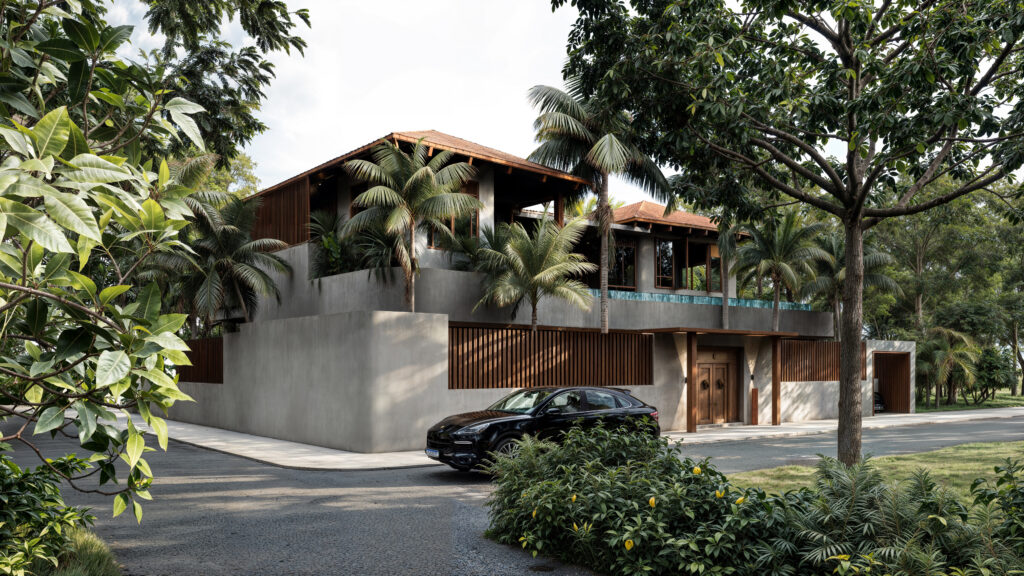
The Turnkey Paradigm: Buyers can entirely avoid these risks by choosing thoughtfully scaled, low-density boutique gated communities. Developments limited to just eight exclusive villas—such as Azul Alma in Parra—offer the perfect solution. They combine architectural purity and field-touching views with ironclad legal compliance, 24/7 power backup, and professional property management.
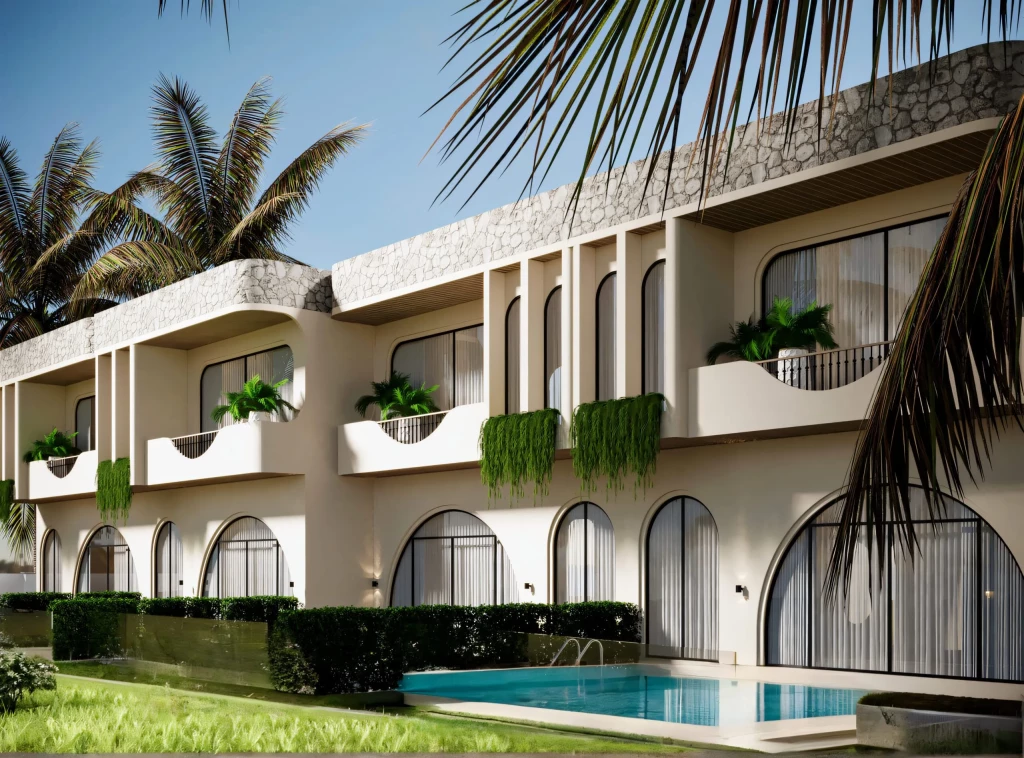
Distinguishing a Holiday Home from an Investment Property
To appreciate the true value of luxury real estate in Goa, one must separate the rigid metrics of a pure investment property from the expansive philosophy of an authentic holiday home.
A pure investment property is inherently inward-looking. It is a numbers game optimized to compress maximum square footage into a restricted grid, often sacrificing spatial integrity to maximize immediate transactional yields.
An authentic holiday home, by contrast, is a legacy asset built around the poetry of space and the art of slow living.
The Spatial Dividend: A pure investment asset focuses on density, an Azul holiday home focuses on “breathing room.” By engineering soaring, double-height living spaces, oversized doors, and massive glass panels, the boundary between the elegant interior and the permanent forest canopy completely dissolves.
While an Azul villa does operate as a high-performance financial vehicle, this capital appreciation is simply a secondary benefit.
The primary return on investment is measured in physical and psychological capital: natural ventilation, uninterrupted field views, and an organic environment where a multi-generational family can gather in complete privacy. It is a transition from the dense cities to a biophilic sanctuary – making it an investment not just in a portfolio, but in a lifestyle of prestige.
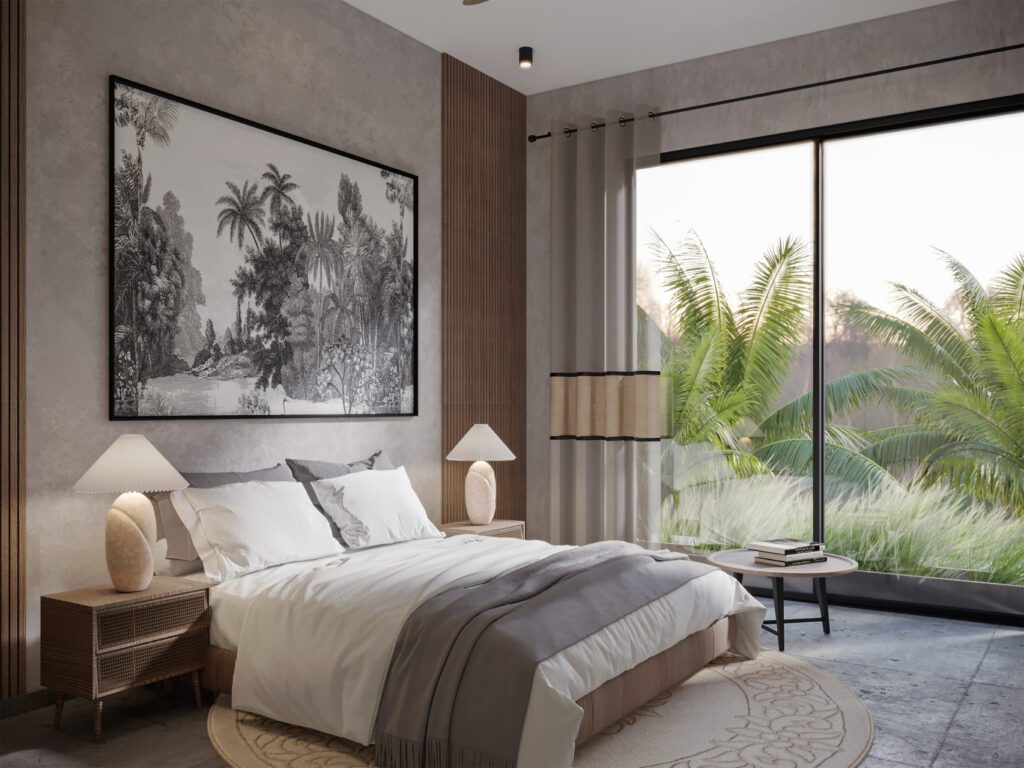
Are Holiday Stays a Good Source of Passive Income?
A luxury estate in North Goa is much more than a cultural statement, it is a sophisticated, high-yielding trophy asset.
Driven by a permanent influx of affluent travelers and remote executives, the short-term rental market in Goa has evolved into a highly lucrative economy, offering consistent cash flow that far outpaces traditional residential real estate.
However, true passive income is never an accident. It is the direct result of architectural rarity and elite positioning. High-end, fully furnished 3 and 4 BHK villas featuring private pools, soaring double-height volumes, and unblocked views of permanent green belts command significant premiums on exclusive rental platforms.
To understand the financial performance of these estates, consider the typical seasonal breakdown of the top-tier North Goa rental market:
| Season | Average Occupancy | Targeted ADR Range (Per Night) |
| Peak Season (Nov – Jan) | 85% – 95% | ₹65,000 – ₹1,20,000+ |
| Shoulder Season (Feb – May / Oct) | 60% – 75% | ₹40,000 – ₹55,000 |
| Monsoon Season (Jun – Sep) | 45% – 55% | ₹30,000 – ₹45,000 |
The Operational Imperative: Income only becomes genuinely “passive” when the logistics of the estate are entirely hands-off. Discerning travelers expect zero operational friction. To consistently capture these premium yields, an estate requires the foundational infrastructure of a luxury resort—including 24/7 power backup, ironclad security, and world-class, turnkey property management that preserves the property’s pristine condition while you remain miles away.
By investing in a low-density development like Azul Alma in Parra, owners benefit from an inherently scarce asset. The combination of an elite address, architectural purity, and professional property management ensures an institutional-grade investment that effortlessly yields a realistic 6% to 10% net annual return.

What is the best region to own a Holiday Home in Goa?
Choosing where to anchor a legacy asset requires a delicate balance.
One must look beyond the over-saturated coastal strips of the past to find a location that offers both rapid economic appreciation and uncompromised privacy. In the contemporary landscape of Indian luxury real estate, that definitive destination is Siolim.
The Investment Play: Strategic Insulation and Growth
Positioned along the picturesque banks of the Chapora River, Siolim stands as a serene, untouched village in the extremely desirable region of North Goa. While older tourist belts grapple with density and infrastructure fatigue, this micro-market has emerged as a high-growth sanctuary.
- The Mopa Catalyst: Seamless connectivity to the Manohar International GOX Airport (Mopa) has accelerated capital migration into this specific valley, positioning luxury villas for sale in Siolim as highly prized assets for wealth preservation.
- Preserved Supply Cap: Strict local conservation ensures its sweeping coconut groves and low-density charm remain legally protected, creating an organic supply ceiling that guarantees long-term capital appreciation.
The Lifestyle Play: Secluded Luxury Meets High-Society Connectivity
As a lifestyle choice, Siolim offers a compelling duality: it provides absolute privacy and seclusion from the commercial noise and crowds, while remaining effortlessly connected to the culinary and cultural pulse of North Goa.
- Epicurean Proximity: Residents can retreat to a biophilic sanctuary framed by old-growth forests, yet remain just a short, scenic drive away from the region’s most celebrated waterfront culinary landmarks, such as Thalassa, Izumi and more.
- The Architecture of Peace: In this elite pocket, the slow living luxury experience is realized through homes built with massive glass panels and soaring vertical volumes that frame permanent river and forest vistas, allowing the spirit to breathe.
Investing in a second home in Siolim ensures that your portfolio gains an institutional-grade asset, while your family secures a timeless, nature-integrated sanctuary that signals quiet wealth and true architectural discernment.
The Connoisseur’s Blueprint: Tips to Maximize Returns on Your Luxury Estate
To elevate a property from a standard second home to a high-performance wealth generator, positioning is everything. Maximizing financial performance within the ultra-premium segment requires a strategic blueprint that aligns architectural purity with market demand.
- Prioritize Biophilic Integrity: Luxury villas in Goa that are engineered with true biophilic principles, featuring soaring double-height volumes and expansive glass panels that frame permanent forest views, naturally command a steep market premium.
- Invest in Turnkey Sophistication: To immediately capture high-ticket corporate retreats and affluent global travelers, the estate must be entirely turnkey. Acquiring a fully furnished villa equipped with modern infrastructure ensures your asset can be monetized from day one without operational friction.
- Insist on Structural Superiority: Goa’s intense monsoon climate demands exceptional construction quality. Choosing boutique developments that pair ironclad legal compliance with premium, time-tested materials completely eliminates future structural depreciation, safeguarding both your rental yield and your long-term capital growth.
Conclusion: Investing in a Life Well-Lived
Ultimately, acquiring a holiday home in Goa transcends the rigid balance sheets of traditional asset classes. While the structural supply ceilings, Mopa airport expansion, and impressive 6% to 10% rental yields present an unassailable financial case for wealth preservation, the true return is profoundly experiential.
An Azul home where voluminous, biophilic design dissolves into a permanent forest canopy is far more than a high-performance addition to a financial portfolio. It stands as a multi-generational legacy, a sanctuary for the soul, and an enduring investment in a life masterfully lived.